Chocolate and cocoa
Unsweetened cocoa adds dry bitterness; chocolate syrup adds sweetness and body. Start with less than you expect, especially with a dark roast.
Café Skills
A good finish is about temperature, texture and restraint—not expensive equipment or perfectly copied latte art.
Milk
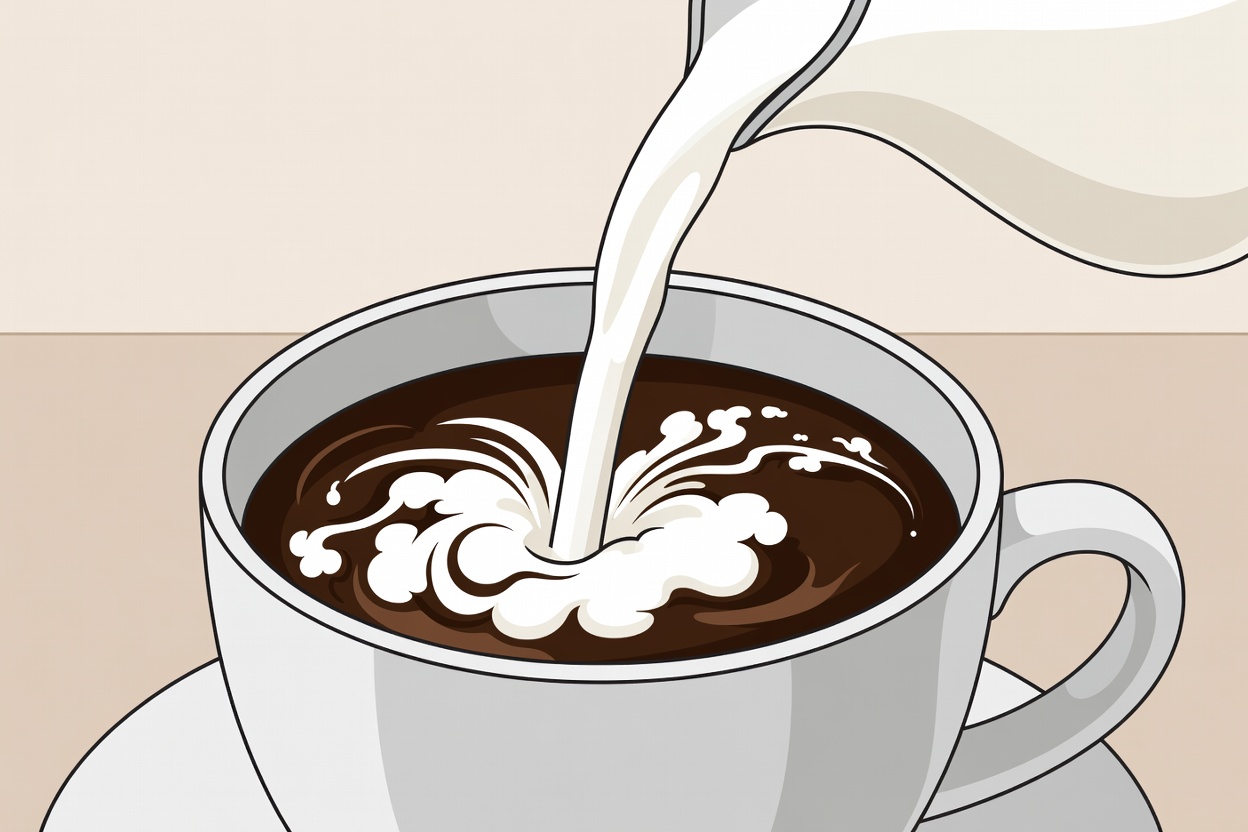
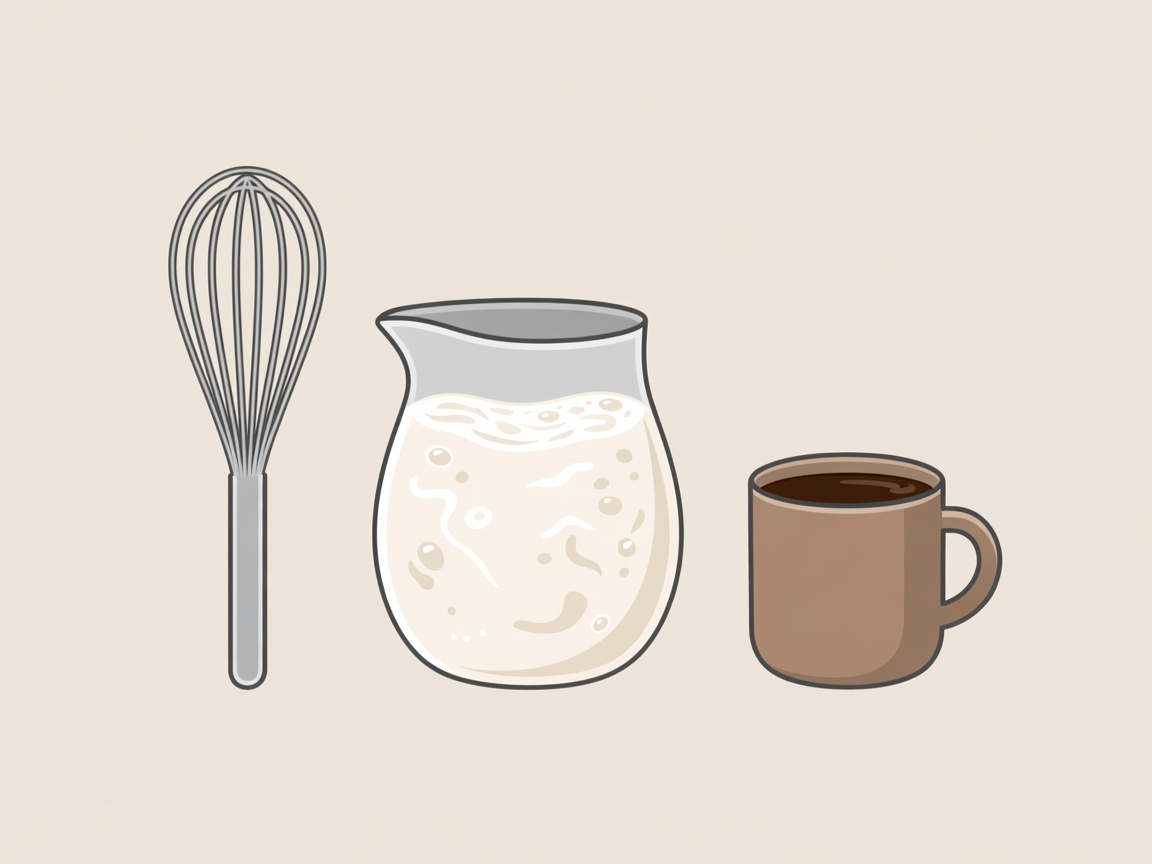
Milk scorches easily. Stop heating when it is hot and steamy but still comfortable to hold briefly through a pitcher or cup. For a soft cap of foam, whisk briskly or use a handheld frother. For a more integrated drink, warm without adding much air.
Unsweetened cocoa adds dry bitterness; chocolate syrup adds sweetness and body. Start with less than you expect, especially with a dark roast.
Cinnamon, cardamom and orange peel are aromatic finishing notes. Add them at the surface so they reach the nose before they dominate the sip.
A tiny pinch of salt can soften perceived bitterness. A small splash of water can open a very concentrated moka pot coffee before milk goes in.
A commercial espresso machine regulates temperature and pressure while creating finely textured microfoam. A moka pot and whisk do something else. Rather than chasing a replica, make the home drink coherent: use concentrated coffee, warm milk carefully and avoid overloading it with syrup. That approach is less frustrating and teaches you more about the ingredients in front of you.
Brew a small moka pot. Warm about twice as much milk as coffee. Pour the milk slowly into the coffee, taste, then add only enough sweetness to settle sharp edges. Dust with cinnamon if it supports the roast.